Shield your eyes, kids. It's time to trip the light fantastic with Prog Rock Saturdays coming back in full force this summer! Every summer I give you warning that things are gonna get experimental and weird, and this might be the weirdest yet. Tonight you dine on Larks Tongue in Aspic and Lambs on Broadway.
This summer, we cast away the refreshing punchiness and brevity of rock and roll to welcome in the long indulgent moans, dirges and flutey compositions of the ol' pile of prog next to the record player. Let's be honest, you won't like all of it. There may very well be a sour-faced Tiki T. sitting at the tiki bar as a Gong record spins, but it's all about the journey, right? So strap in and freak out because we're blasting off! XO! Tiki T.
The weather is getting nicer by the day. Spring is in full bloom and this coming weekend is Memorial Day Weekend which means three days of drinking, eating & rock 'n' rollin'.
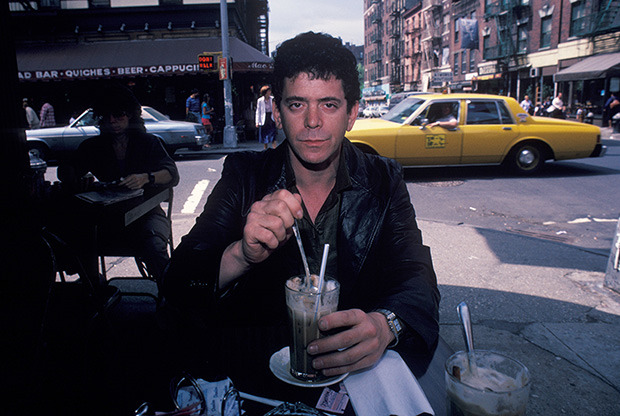
"Lou Reed is a prick and a jerkoff who regularly commits the ultimate sin of treating his audience with contempt."-- Lester Bangs from his Rolling Stone review of The Bells-- "He's also a person with deep compassion for a great many other people about whom almost nobody else gives a shit." Hello Friends,
Lou Reed would begin the 1970's with The Velvet Underground's most ambitious record, Loaded, and would re-define himself multiple times throughout the decade: rock star, poet, avant-garde artist, junkie & sad sac. He winds up the decade with the 1979 record, The Bells, a record far below most people's radars. Of course, we're big fans of almost all things related to Uncle Lou here on Vinyl in the Valley and The Bells is no exception! Its an ambitious mashup of classic Reed songwriting among plenty of jazz, funk, R&B, disco and doo-wop. While a lot of his contemporaries were going more "minimal" or punk, The Bells almost sounds as if Lou wanted to take over Bruce Springsteen's spot in the E Street Band. (Springsteen actually cameo'd on Reed's previous record, 1978's Street Hassle.) The results are of course weird and, for the most part, wonderful. The songs and characters on The Bells are all about outsiders looking for in, longing to be loved, longing to be accepted. Deadbeat dads; exiled actors; children who have returned to their suburban homes only to realize that living on their own in the big city have turned them into psychic ghouls-- at least in the eyes of the families. Its like Dickens, only in reverse. The albums kicks off with the short & jazzy, "Stupid Man" about a narrator who regretfully escapes from his home and family only to beg that his wife "to please say hello" and "give a great big kiss" to his "little baby daughter". Ever the wordsmith, the lyrics to the next song, "Disco Mystic", are as follows: "DISCO. DISCO MYSTIC" (repeat about 40 times). In nearly anyone else's hands, "Disco Mystic" would be grating, indulgent & annoying, but somehow Sweet Lou pulls it off! Its hypnotic, catchy and if you buy the theory that Lou Reed was to 1970's New York City as Charles Dickens was to 19th Century London, its as much a comment on the narcissism, monotony and decadence of the NYC disco scene of the late 70's. The third song on the album is one our absolute favorite Lou Reed songs, "I Want To Boogie With You". Its a great song for slow dancing drunk with your girl on a Friday or Saturday night.
With its manic vocals and horn-section, "With You" has a "Whatever Gets You Thru The Night"-vibe. At any moment, you wouldn't be surprised to hear, "Live from New York... It's Saturday Night!" (Also, this song like two or three others on this record are co-written by ex-Crazy Horse & future E Streeter, Nils Lofgren.) The mania continues on the frantic "Looking For Love", featuring some raucous sax playing by Marty Fogel! The Side concludes with the bizzaro-sounding, "City Lights"-- a song that's both a tribute to the late Charlie Chaplin as well as a not-so subtle anti-censorship statement. Its a decent song (also co-written with Lofgren) and has Lou hitting the perhaps his deepest and lowest vocals ever on record. (Low Reed?) Side Two begins with Reed's ode to dark and lonely New York City nights, "All Through The Night". To be honest, this one does get a little annoying. There's a whining saxophone riff throughout and the song seems to be (purposely) cluttered with random background/party noise, conversations and speeches. Also, his vocals here kind of remind us of Adam Sandler a little bit. Which is good for Sandler, not so much for Lou. Things rebound on "Families", a more classic-sounding Reed song, which despite the rather upbeat musicianship is about a heartbreaking return to his childhood "home": And now that dog's more of a part of this family Then I am, too I don't come home much anymore No, no, no, I don't come home much anymore, mama
And mama, I know how disappointed you are And papa, I know that you feel the same way, too And no, no, no, no, no, I still haven't got married And no, no, no, there's no grandson planned here for you ...
But papa, I know that this visit's a mistake There's nothing here we have in common, except our name
And families that live out in the suburbs Often make each other cry And I don't think that I'll come home much anymore No, no, I don't think I'll come home much again
The album concludes with the amazing 9 minute title track which features some fantastic trumpet-playing by frequent Ornette Coleman side man, Don Cherry. A haunting & hypnotic space-jazz jam (think Sun Ra meets Berlin-era Bowie) that builds and builds against some incomprehensible spoken dialogue and Reed's lyrics about an actor hanging out on a ledge in New York City. Just as he jumps (or doesn't) he proclaims, "Look there are the bells... here come the bells!"
RATING: 4.5 families that live out in the suburbs often make each other cry out of 5
Blues legend, B.B. King passed away yesterday at the ripe old age of 89.
Like any virtuoso of his craft, B.B. King made his incredibly smooth and precise guitar playing seem effortless and easy! The following is from the liner notes of King's Live in Cook County Jail record from 1971: With his trusty Gibson guitar Lucille, King developed his audiences in stages, connecting with African-Americans region by region in the 1950s and '60s, breaking through to the American mainstream in the '70s and becoming a global ambassador for the blues soon thereafter, becoming the first blues musician to play the Soviet Union. R.I.P. BB!
Here's some pretty cool electro-pop courtesy of the French duo, Mellow.
Video is directed by Roman Coppola who also recruited the band for the soundtrack of his debut film, CQ. The video seems to tell the old familiar story of boy-loses-girl, girl-hooks-up-with-air-brush-artist, boy-goes-out-for-hibachi-with-ex-and-air-brush-artist-for-daughters-birthday, boy-impresses-girl-with-breaking-world-domino-record, boy-wins and scene!
American Gigolo Soundtrack - 1980 - Polygram Records
Hello Friends,
Need a quick pick me up? We do! So tonight we're doing cocaine listening to Giorgio Moroder's excellent soundtrack to the 1980 film, American Gigolo. Written & directed by the great Paul Shrader (Taxi Driver, Raging Bull, Affliction) and starring Richard Gere & Lauren Hutton, American Gigolo helped usher in the sleazy, superficial, pre-AIDS 1980s. The soundtrack is practically a character in the film itself; its impossible to separate the two even 30+ years later. To this day, we can't even think of Richard Gere without imagining him walking him into a gay nightclub with Cheryl Barnes's "Love & Passion" blasting!
The soundtrack album gets the party started with an 8 minute long epic version of Blondie's "Call Me" aka "The Theme From American Gigolo". A # 1 song in both the U.S. & U.K. for several weeks, its sexy and driving and manic and it really sets the stage for the movie as well as whats to come on the rest of the record! FUN FACT: Originally, Moroder wanted to recruit none other than Stevie Nicks to collaborate with on this soundtrack. She was unable to commit to him due to conflicts with her record label. "Call Me" is followed by the aforementioned, driving disco-beat of "Love & Passion" and the side ends with the sleazy-sounding, noirish instrumental, "Night Drive". Side Two is entirely instrumental and kicks off with "Hello Mr. W.A.M.", the song heard over the film's finale. Its also Moroder's take on Wolfgang Amadeus Mozart's Clarinet Concerto K. 622. Its equal parts Clockwork Orange, prog rock & Studio 54.
"The Apartment", another dark instrumental, sounds like Aphex Twin remixing Dark Side of the Moon. "Palm Springs Drive" is an instrumental take on "Call Me" and its impossible to drive around downtown Los Angeles at night, looking for johns, without having this song pulsate in your brain! Next there's a reprise of Side One's "Night Drive" only slower and more lumbering with lots of synthy-low notes and some church bells thrown in for good measure! Closing things is the melodic ballad, "The Seduction (Love Theme)" which comes dangerously close to sounding like elevator music-schmaltz. But, in the context of this record, its a subtle and fitting conclusion.
RATING: 4.5 Roll Me in Designer Sheets I'll Never Get Enough out of 5
Last week, the lead singer of the 60's garage rock classic, "Louie Louie", passed away. Three chords, incomprehensible lyrics and plenty of sneering, punk attitude. Overused? Sure! But the song probably launched tens of thousands of suburban wannabe rockstars in the garages and basements across America! from bbc.com...
Jack Ely, lead singer of The Kingsmen, who were best known for 1960s hit Louie Louie, has died at the age of 71.
His son Sean Ely said the musician died at home in Redmond, Oregon, after a long battle with an illness.
"Because of his religious beliefs, we're not even sure what (the illness) was," he said.
Ely's incoherent singing on Louie Louie led the FBI to investigate the famous track on the grounds that it might be obscene.
The law enforcement agents concluded, in a lengthy investigative report, that the song was "unintelligible at any speed".
Ely had a falling out with the band shortly after the song was recorded and later trained horses in Oregon.
Louie Louie was originally recorded in 1957 by Richard Berry, who had written it two years earlier.
The song is written from the perspective of a man who wants to sail to Jamaica to return to a girl he loves.
But it was Mr Ely's rendition that popularised the song.
His son said: "Right out of his mouth, my father would say, 'We were initially just going to record the song as an instrumental, and at the last minute I decided I'd sing it. It's all of this is in a 10-by-10 room with one microphone. I'm standing on my tippy toes yelling into the microphone: Louie Louie! Louie Louie! We gotta go!'"
The sound engineer working on the track raised the studio microphone to several feet above Ely's head and placed him in the middle of a group of musicians to create a better "live feel" for the recording.
The result was that Ely - who was 20 at the time - had to shout as loudly as he could to be heard over the drums and guitar.
It might not have helped, either, that Ely was wearing braces at the time, although he maintained that the main problem was trying to sing with his head tilted back at a 45-degree angle.
The song has been widely recognised by organisations including the Rock and Roll Hall of Fame and the Grammy Hall of Fame for its influence on the history of rock and roll.
Ely co-founded The Kingsmen in 1959. The band primarily recorded cover versions of songs. Four years later, the group recorded Louie Louie. The Kingsmen had a couple of other minor hits, Money and The Jolly Green Giant.
However, Ely was content with his legacy as a one-hit wonder, according to his son.
"He wanted to try on different occasions to pursue other endeavours in the music industry, but I think when it was all done and said he was pretty happy that he did Louie Louie."


 Let's be honest, you won't like all of it. There may very well be a sour-faced Tiki T. sitting at the tiki bar as a Gong record spins, but it's all about the journey, right? So strap in and freak out because we're blasting off!